

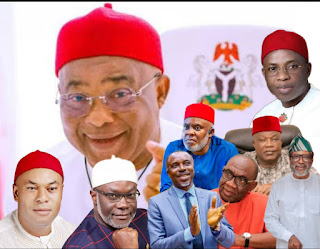
The recently concluded congress of the All Progressives Congress (APC) in Imo State may have appeared routine on the surface, but beneath it lies a deeper political calculation that could shape the state’s power dynamics ahead of the 2027 governorship election.
At the centre of the development is the emergence of the Chairman of the Imo State Oil Producing Areas Development Commission (ISOPADEC), Chief Austin Onyedebelu, an Orlu indigene, as the new state chairman of the APC.
For keen observers of Imo politics, the choice of Onyedebelu carries strategic implications. By positioning an Orlu son at the helm of the party structure, Governor Hope Uzodinma appears to have subtly redirected the succession conversation away from Orlu zone—his own political base—toward the other two senatorial zones: Owerri and Okigwe.
In essence, the governor may have quietly set the stage for the next chapter of the Charter of Equity, the power rotation principle he has consistently advocated.
With Uzodinma expected to complete his tenure in less than two years, attention is gradually shifting toward the political actors who may seek to inherit the mantle of leadership.
Already, several influential figures within the APC are being mentioned in political conversations as potential aspirants. Each comes with a different political pedigree, narrative, and support base.
Below are some of the key personalities whose names continue to resonate within Imo’s evolving political discourse.
Dr. Ikedi Ohakim – The Former Governor Seeking Redemption
Former Imo State governor Dr. Ikedi Ohakim (2007–2011) remains one of the most recognizable figures in the state’s political landscape.
Ohakim’s relationship with Governor Uzodinma dates back several years and has been shaped by moments of political loyalty and strategic partnership. One such defining moment occurred during the 2011 elections when Ohakim reportedly backed Uzodinma’s senatorial ambition, a decision many believe cost him significant political support in Orlu and contributed to his electoral defeat.
Today, that gesture continues to fuel speculation that Uzodinma may consider him a worthy successor.
Ohakim’s supporters argue that he deserves an opportunity to complete what they describe as an “interrupted tenure,” insisting that his administration’s legacy of infrastructure development and rural empowerment still resonates across the state.
With deep political networks and extensive experience in governance, Ohakim remains a formidable figure should he formally enter the race.
Prince Eze Madumere – The Politician of Sacrifice
Former Deputy Governor Prince Eze Madumere occupies a distinctive position in Imo politics.
Madumere built a reputation as a loyal ally to former governor Rochas Okorocha before later distancing himself from what he described as the concentration of power within a political dynasty.
His decision to abandon his own senatorial ambition in order to challenge that structure earned him a reputation among supporters as a politician willing to sacrifice personal ambition for broader political principles.
With extensive administrative experience and a grassroots network built over decades, Madumere’s political appeal cuts across several demographics. Should he contest, his campaign narrative will likely revolve around service, experience, and political courage.
Sir Jude Ejiogu – The Technocrat in the Race
Former Secretary to the Imo State Government Sir Jude Ejiogu represents a different kind of political profile.
Known more for his administrative competence than populist politics, Ejiogu has built a reputation as a strategic thinker and an efficient coordinator of government activities.
While he may not command the same mass following as some other aspirants, his strength lies in his deep understanding of governance and party structure.
Among party insiders and delegates who prioritize technocratic leadership and stability, Ejiogu could emerge as a compelling candidate.
Rt. Hon. Henry Nwawuba – The Policy-Driven Legislator
Former member of the House of Representatives for Mbaitoli/Ikeduru, Rt. Hon. Henry Nwawuba, represents the rising technocratic wing of Imo politics.
Currently serving as the Executive Secretary of the National Assembly Library Trust Fund, Nwawuba has developed a reputation for policy expertise and legislative sophistication.
Though he has not formally declared interest in the governorship race, political analysts believe that if the contest tilts decisively toward Owerri zone, Nwawuba could become one of the most viable candidates.
His ability to bridge legislative experience with policy-driven governance may appeal to both party stakeholders and the broader electorate.
Chief Marcon Nlemigbo – The Party Strategist
Former APC state chairman Chief Marcon Nlemigbo is widely regarded as one of the most experienced party organizers in Imo State.
Having once controlled the party machinery, Nlemigbo understands the intricate dynamics of delegate politics, grassroots mobilization, and internal party negotiations.
Should he decide to contest, his strength would lie in his familiarity with the party structure and his ability to rally support within APC ranks.
For delegates who value loyalty and party-building credentials, Nlemigbo may represent continuity and stability.
Dr. MacDonald Ebere – The Immediate Past Chairman
Another potential aspirant is Dr. MacDonald Ebere, the immediate past chairman of the APC in Imo State.
Ebere’s tenure was largely defined by efforts to consolidate party unity and maintain internal cohesion in the face of competing political interests.
His leadership experience within the party structure gives him access to a strong network of stakeholders and loyalists.
However, if he eventually joins the governorship race, his major challenge would be expanding his influence beyond party delegates to the broader voting population.
Hon. Enyiannaya Onuegbu – The Grassroots Mobilizer
Hon. Enyiannaya Onuegbu represents the grassroots-oriented dimension of the political conversation.
Known for his accessibility and strong connection with ordinary citizens, Onuegbu’s appeal lies in his reputation as a people-oriented politician.
His political strategy would likely focus on consolidating support within Owerri zone while projecting himself as a unifying figure capable of bridging the interests of all three senatorial districts.
Senator Ezenwa Onyewuchi – The Master of Political Timing
Few politicians in Imo have demonstrated the ability to navigate shifting political alliances as effectively as Senator Ezenwa Onyewuchi.
Over the years, Onyewuchi has consistently positioned himself close to the centre of power, making strategic moves that have steadily elevated his political career.
This track record has earned him a reputation as one of the most politically fortunate figures in the state.
Yet, as the race toward 2027 gradually intensifies, observers are beginning to ask whether his political instincts and timing will once again guide him to the right side of history—or whether the increasingly competitive environment will test the limits of his famed political luck.
Uzodinma’s Silence: Strategy in Motion
Despite the growing speculation, Governor Hope Uzodinma has maintained a deliberate silence regarding his preferred successor.
For seasoned political watchers, this silence is far from accidental.
By withholding any clear endorsement, the governor appears to be carefully observing the evolving political terrain—allowing alliances to form, ambitions to surface, and the strengths of potential candidates to reveal themselves.
The emergence of an Orlu chairman in the party structure further reinforces the perception that Uzodinma is attempting to stabilize the political equation among the three senatorial zones while ensuring that the Charter of Equity remains a guiding principle.
The Road to 2027
Although the election is still some distance away, the APC congress has already triggered early maneuvering within Imo’s political arena.
What lies ahead is likely to be a period of intense consultations, shifting alliances, and subtle power negotiations among the state’s political elite.
With a mix of former governors, experienced administrators, legislators, and grassroots politicians potentially entering the contest, the race for Uzodinma’s successor is shaping up to be one of the most compelling political battles in the state’s recent history.
Ultimately, the decisions taken in the coming months will not only determine who becomes the next governor of Imo State but could also redefine the state’s political trajectory for years to come.

